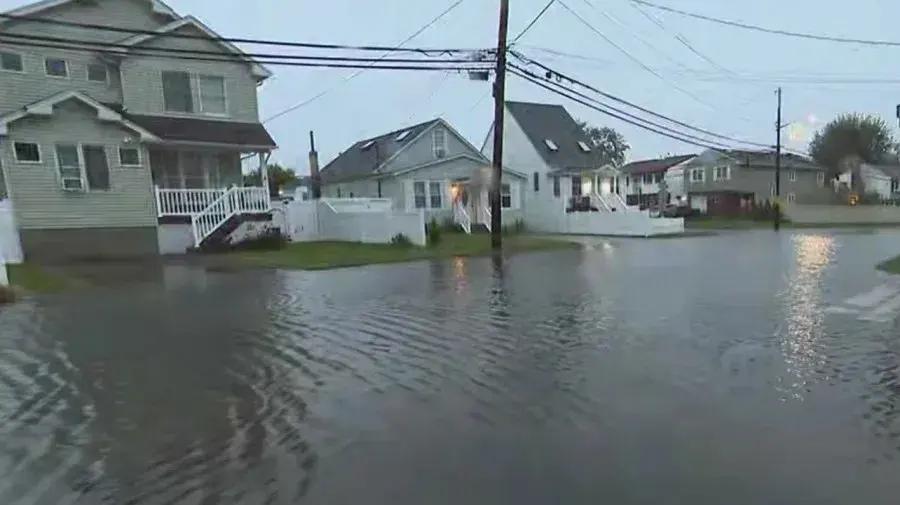
Carver is a town of brooks, ponds and bogs. A day of heavy rain does not look like a coastal surge. It looks like a quiet rise in the yard, a puddle at the foot of a door and a wet floor that was dry last night.
Key takeaways
- Carver has many small brooks, rivers and ponds, a large cedar swamp and bog land, so rain has plenty of places to collect.
- The Weweantic and Wankinco rivers both begin in Carver, and about 84 percent of the town drains to Buzzards Bay.
- Growers flood cranberry bogs in October for harvest, so a flooded bog in the fall can be normal while a flooded home is not.
- Inland flooding can back up private septic systems and contaminate private wells, so check both after a flood.
- Fast extraction and thorough drying limit the damage from rain water that reaches a floor.
How water moves through Carver
Carver is a mostly wooded and rural town, with a cedar swamp in the middle and bogs scattered through it.
Water here does not rush to a harbor. It drains slowly through brooks and ponds toward Buzzards Bay, with some in the north reaching Cape Cod Bay or Narragansett Bay.
Neighbors who have lived here a while often know which low spots collect water first. Ask them, and note those places on your own property.
The rivers that begin here
The Weweantic River, the largest freshwater river flowing into Buzzards Bay, and the Wankinco River both begin in Carver. They run through Wareham to Buzzards Bay.
Cranberry bogs are concentrated around the Weweantic River in Carver, Plymouth and Wareham.
Ponds, brooks and wet ground
Vaughn Pond, Bates Pond, Sampson's Pond and Annasnappet Pond are a few of the named ponds. The town has many small brooks too.
After heavy rain, low spots near any of these waters can collect more than they can drain.
A flooded bog is not always a flooded home
Growers flood Carver's cranberry bogs in October to harvest the berries. A bog full of water in the fall is a routine harvest step, not a flood warning.
The risk to a house depends on where the water goes when it rains. Bog land also keeps much of the town rural and limits growth, so many homes sit close to wet ground.
- A bog flooded on purpose is a harvest sign and does not alone mean a nearby house is at risk.
- Rain on top of flooded bogs and full ponds is a different matter, because there is nowhere for the water to go.
- Watch the water around the house, not the bog.
- Ask neighbors and the town about a road closure or a drainage problem before driving through standing water.
What to do when rain water reaches a floor
The first day is about safety and stopping the spread. Rain water that enters a house from the ground is often not clean, because it crosses lawns, driveways and sometimes septic areas first.
- Turn off power to the wet area if the panel is dry and you can reach it safely.
- Stay out of standing water that touches outlets, cords or appliances.
- Move rugs, boxes and furniture onto dry ground.
- Photograph the water, the damage and the outside of the house before anything moves.
- Shut off any outdoor source of water, such as a hose or an irrigation timer.
- Call the insurer and ask what the policy says about flood and groundwater.
Septic systems and private wells after a flood
State guidance says inland flooding can back up or damage private sewage systems and contaminate private wells, and a well that was flooded needs disinfection and sampling before the water is used again.
The Carver Board of Health has pages on septic systems, Title 5 inspection, private wells and septic pumpers. Only the North Carver area is served by the North Carver Water District, so private wells are part of the picture elsewhere in town.
If a backup follows the flood
A backup is a sewage job, not a clean water job. Porous materials it touched are removed and hard surfaces are treated.
See the Carver storm flood cleanup page for the process.
How extraction and drying work
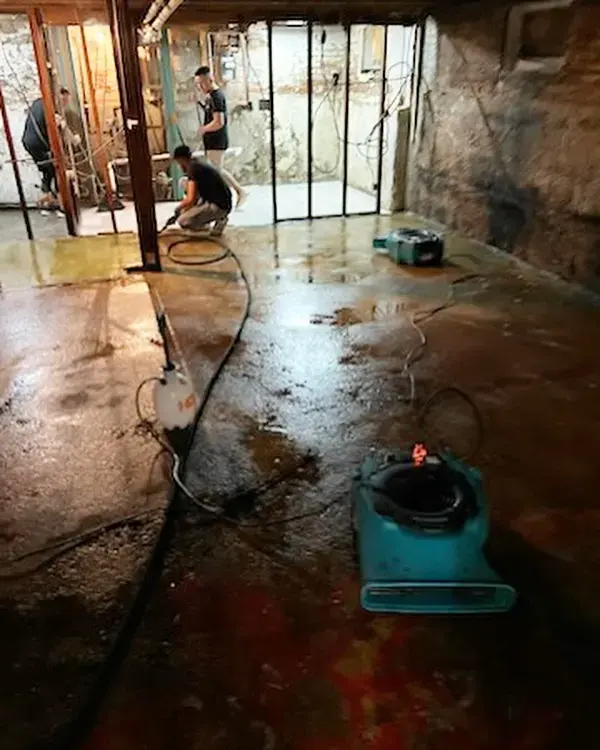
Standing water comes out first. A pump or truck mounted unit removes it, and wet carpet and pad are removed because they hold water against the floor.
Water extraction is described in detail on its own page.
Wet ground, wet framing
In a town with so much wet ground, water can sit under a floor or in a wall base for days after the rain ends. The crew uses moisture meters to find it.
Equipment and readings
Air movers and dehumidifiers run around the clock. The crew returns each day, takes readings and moves equipment until the framing and subfloor read dry.
Most Carver homes are single family houses, and about 31 percent were built between 1960 and 1979, so the work is often in framed floors and drywall walls.
Getting ready for the next heavy rain
A few simple checks help before the next big storm. Clear gutters and downspouts, and make sure they carry water away from the foundation.
Know where the water goes in your yard, and keep a list of contacts for a restoration crew, the insurer and the septic pumper.
- Move stored items off the floor of a low room.
- Check that sump pumps, if the house has one, run on a test and have a backup plan for a power cut.
- Keep drains and culverts clear of leaves and debris.
- Take photographs of the house and contents so a claim has a baseline.
When to call for help
Call a restoration crew once the building is safe and water is on the floor. For a general overview of flood work, the main storm flood cleanup page covers the process, and the Carver hub lists every service in town.
Ask your own insurer which coverage applies to groundwater and rain, since policies differ.
Questions
Is a flooded cranberry bog in October a warning sign?
Not by itself. Growers flood Carver's bogs in October to harvest the berries. The risk to a house depends on rain and how water drains around the property.
Which rivers begin in Carver?
The Weweantic and Wankinco rivers both begin in Carver and flow through Wareham to Buzzards Bay.
What happens to a private well after a flood?
State guidance says flooding can contaminate private wells, which then need disinfection and sampling before the water is used.
Can flood water back up a septic system?
Yes. State guidance says inland flooding can back up or damage private sewage systems. A backup is cleaned as a sewage job.
How long does drying take after rain water reaches a floor?
Usually several days. The crew checks readings daily and stops when framing and subfloor are dry.