Structural Drying and Dehumidification in Plymouth, MA
Surfaces dry fast; framing, subfloor and plaster do not. The drying team sets air movers and dehumidifiers to the class of loss and keeps them running until every material reads dry against a dry reference.
(888) 480-6221Get the structure dried properly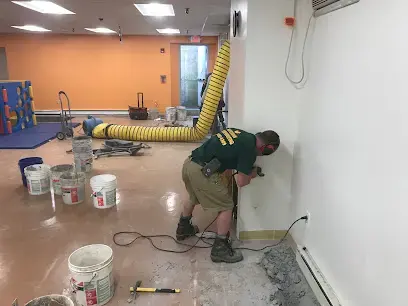
Structural Drying and Dehumidification at a glance
First steps for structural drying and dehumidification in Plymouth
- 1
Stop the water
Drying cannot start until the source is off.
- 2
Close the windows
On humid days open windows add moisture.
- 3
Leave the equipment running
Turning it off at night slows the drying.
- 4
Photograph, then call
Record wet areas before anything is moved.
How structural drying and dehumidification works in Plymouth
Structural drying is the part of a water loss that decides whether trouble shows up months later. A floor can feel dry in a day while the subfloor, the bottom plate and the drywall behind the baseboard stay wet. Plymouth adds its own challenge: humid air off the bay in summer, and old houses full of plaster, wide pine boards and fieldstone.
What does structural drying and dehumidification cost in Plymouth, MA?
In Plymouth, MA, structural drying typically runs $1,500 to $12,000, depending on how many rooms need equipment, the class of loss, whether hardwood, plaster or fieldstone is involved and how many days the equipment runs.
One or two rooms
$1,500 to $4,000- Air movers
- LGR dehumidifier
- Daily readings
Several rooms or a level
$4,000 to $8,000- Cavity drying
- Psychrometric logs
- Claim documentation
Class 4 materials
$8,000 to $12,000- Desiccant drying
- Hardwood drying mats
- Extended monitoring
Ranges are typical, not a quote: category of water, square footage, material class and how fast drying started move the number most. Run the Plymouth water damage cost calculator for a closer range.
The structural drying and dehumidification process, stop by stop
The tech who does the walkthrough maps moisture before any equipment goes down, so the drying plan matches what is actually wet. Equipment stays until the readings say dry, not until the room looks dry.
- 1
Reference
A dry reference reading sets the goal.
- 2
Set equipment
Air movers and dehumidifiers sized to the class.
- 3
Log daily
Room conditions and material readings recorded.
- 4
Verify dry
Equipment leaves when the materials match the goal.
The equipment and why it is sized
Each tool has a job, and the class of loss sets how much of it a room needs.
- Air movers sweep wet surfaces and push evaporation.
- LGR dehumidifiers pull the evaporated water out of the air.
- Desiccant units and drying mats handle Class 4 materials like hardwood, plaster and stone.
How the drying team measures dry
Before equipment goes down, the tech who does the walkthrough takes readings of an unaffected material of the same kind in the same house. That dry reference becomes the goal. Each day the team logs temperature, humidity and grains per pound in every room, plus readings on the wet materials, and adjusts equipment as the numbers move. Equipment leaves when the materials match the reference, not on a schedule.
- Dry reference taken on the first visit.
- Daily psychrometric logs for the claim file.
- Equipment adjusted as readings fall.
Why humidity matters in Plymouth
Summer air off the bay holds a lot of moisture, so drying is done with the house closed and dehumidifiers running, not windows open. The EPA indoor air quality pages explain indoor humidity, and Energy Saver covers dehumidifiers. Estimate a schedule with the drying time estimator.
Structural drying and dehumidification across Plymouth and the bay towns
The Plymouth restoration crew covers ZIP 02360, 02361, 02362 and Manomet 02345, from Downtown Plymouth and North Plymouth out to Manomet, Cedarville, West Plymouth and The Pinehills.
Nearby coverage reaches Kingston, Duxbury, Carver, Plympton, Marshfield, Wareham, Bourne.
Related water damage services in Plymouth
Structural Drying and Dehumidification questions in Plymouth, MA
What does IICRC S500 drying mean?
It means drying follows the industry standard: water categorized, equipment sized to the class of loss and materials dried to within 2 to 4 points of a dry reference.
Why can't the fans come out when the floor feels dry?
Framing, subfloor and drywall hold water after the surface feels dry. Readings decide when equipment comes out.
Can hardwood floors be saved?
Often, if drying starts quickly. Drying mats pull water up through the boards, and the floor is watched for cupping as it dries.
Why is the house so warm during drying?
Warm air holds more moisture and speeds evaporation. The drying team manages temperature as part of the plan.
How long does structural drying take?
Usually three to seven days. Plaster, hardwood and fieldstone take longer.
What is a psychrometric log?
A daily record of temperature, humidity and grains per pound of moisture in each room, which shows the drying is working and supports the insurance claim.
Still dealing with structural drying and dehumidification?
Shut off the water at the source if it is safe, keep clear of wet outlets, then call.
Need it dried right? Start structural drying now.
Water left in framing and subfloor causes trouble long after the surface looks fine. The drying team measures until it is gone.
(888) 480-6221Plymouth drying crew, 24/7- Dispatch around the clock, storm nights included
- Drying held to the IICRC S500 standard
- Daily moisture logs for the claim file
- Find us on Google