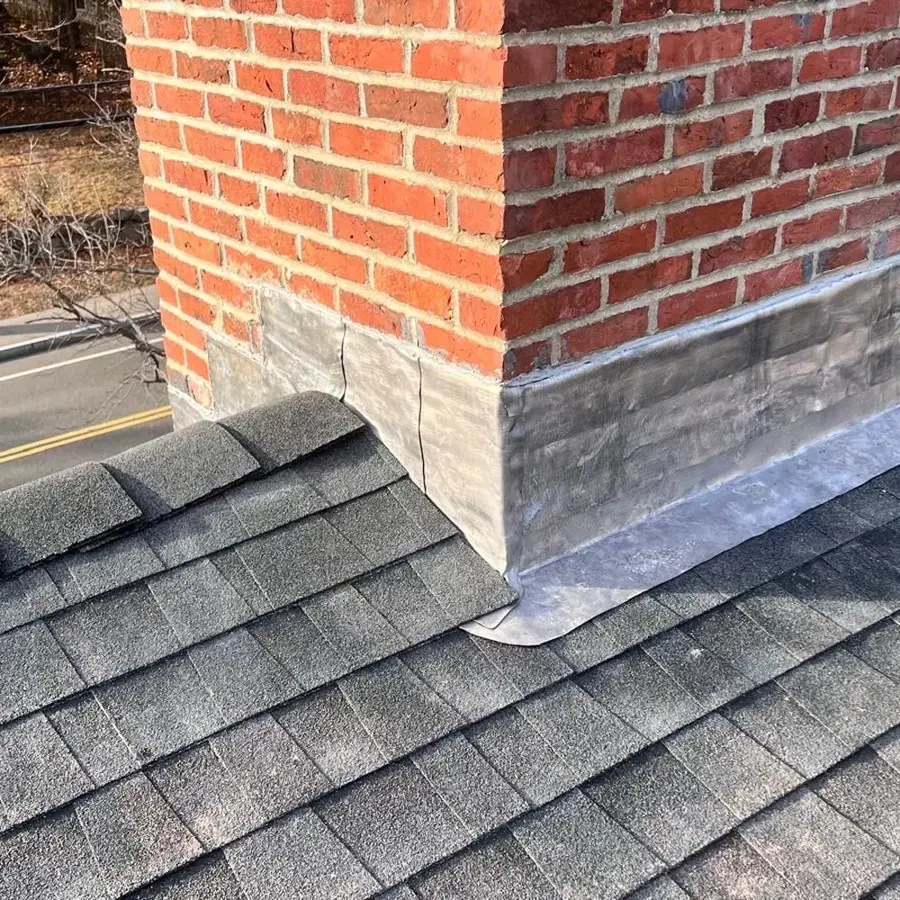
A fall storm can pass without a drop inside the house and still leave a leak. Wind pushes rain sideways under shingles and around flashing, and the stain on the ceiling appears days later.
Key takeaways
- Wind driven rain finds shingle edges, flashing and chimney joints that stay dry in ordinary rain.
- A ceiling stain often shows up days after the storm, once the insulation above is soaked.
- The source has to be found before drying starts, or the stain returns.
- Wet insulation holds water against the ceiling and is usually removed, not dried in place.
- Duxbury recorded a 54 mph gust on October 31, 2019, a reminder that fall storms bring real wind here.
Why wind makes ordinary roofs leak
A roof is built to shed rain that falls from above. Wind changes the direction, and rain driven sideways or upward can get under shingle edges and past flashing that never leaks otherwise.
Duxbury sits between Duxbury Bay, Kingston Bay and Cape Cod Bay, with a lot of open water around it. Exposed homes take the full force of a coastal storm.
What the town has recorded
On October 31, 2019, Duxbury recorded a 54 mph wind gust in a strong fall storm. Downed trees came with it.
Branches and falling limbs can tear shingles or crack a roof edge, and the leak shows up with the next rain.
Older and exposed houses
Older homes near the water, with older roof coverings and worn flashing, are the usual suspects. Newer houses are not immune, because wind can lift a shingle on any roof.
Where the water gets in
Most storm leaks come from a short list of places. A good inspection starts with those spots, not with the middle of the roof.
- Flashing around chimneys, skylights and vent pipes.
- The edges where a roof meets a wall or a dormer.
- Shingles that were lifted, cracked or torn off by wind.
- Roof valleys, where two slopes meet and water runs fastest.
- Gutters and drip edges that backed up and sent water under the roof edge.
Reading the ceiling: what a stain means
A ceiling stain is the end of a path, not the start. Water enters at one point, runs along a rafter or the top of the drywall, and shows up somewhere else.
The stain tells where the water finally stopped, which is not always under the leak.
Signs the leak is the roof
Stains that appear after rain or wind, grow when the next storm arrives and dry out in between point to the roof. A ring that gets darker with each rain is a common pattern.
- Brown or yellow rings that grow after storms.
- Stains near an outside wall, a chimney or the roof edge.
- Damp or matted insulation in the attic.
- Peeling paint or a bubble in the ceiling that is dry in between.
Signs it is plumbing instead
A stain that grows in dry weather, appears under a bathroom or follows a washing machine cycle is more likely plumbing. The source must be known before drying starts, which is why the check matters.
A ground level check after every big storm
Most owners never go on a roof, and nobody should in wet or windy weather. A short walk around the house after a storm still shows a lot.
Look up from the yard, then look inside. The two views together point to where water may have entered.
- Scan the roof edge and ridge for missing, curled or lifted shingles.
- Look for gutters that sag or overflow, because water spilling behind them wets the roof edge.
- Check the ceilings in the top floor rooms, especially near chimneys and outside walls.
- Open the attic hatch, if there is one, and shine a light on the underside of the roof boards and on the insulation.
- Note the date and take a photograph of any mark, so you can see later whether it grew.
What to do the first day
The first day is about limiting what the leak can reach. Small moves make a large difference.
- Move furniture and rugs away from the wet spot and cover what cannot move.
- Put a bucket under any drip and poke a small hole through a bubbling ceiling only if it is sagging with water, to let it drain in a controlled way.
- Keep people away from a bulging ceiling, because it can fall without warning.
- Turn off the lights and the fixture on a wet ceiling until the electrician has checked it.
- Photograph the stain, the attic and any roof damage you can see from the ground.
- Call the insurer, and ask a roofer about a tarp if more rain is coming.
How the ceiling and the attic are dried
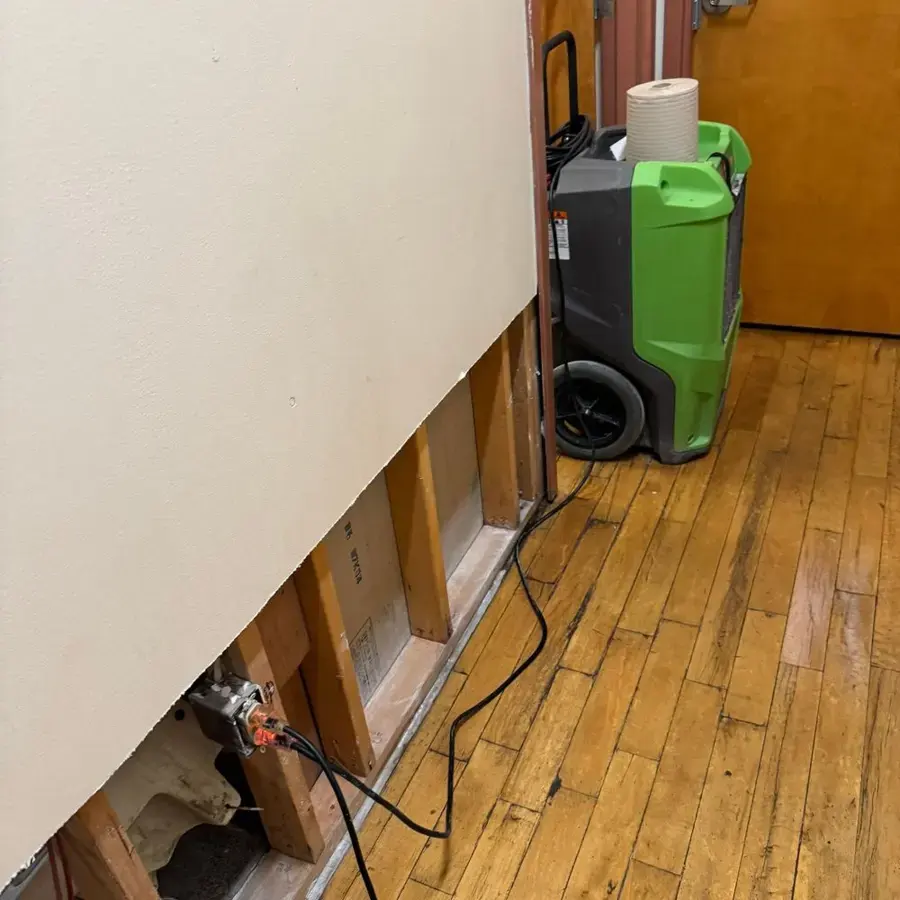
A restoration crew starts by finding where the water went. Moisture meters and a thermal camera show wet insulation and wet framing above the ceiling.
The detail on this is in the roof leak water damage page for Duxbury.
Insulation and drywall
Wet insulation is pulled out, because it holds water against the ceiling for weeks. Drywall that is sagging, stained through or soft is cut away and replaced.
Where the ceiling is only damp, the crew may dry it in place with air movers and a dehumidifier.
Joists and sheathing
Framing above the ceiling is dried until readings are normal. If the roof sheathing is wet, it is dried too, once the roof has been repaired.
The ceiling leak water damage page covers what the work looks like inside the house.
Repair and insurance
Drying does not fix the roof. A roofer repairs the shingles or flashing, and the restoration crew dries what got wet.
Both have to happen, or the stain comes back.
Policies differ on wind and storm damage, so ask your own insurer what applies before work starts.
A quick wrap up
Check ceilings after the first big fall storm, look in the attic if it is safe, and call early. A small stain handled early is a small job.
The Duxbury hub lists the other water services, and the main roof leak page covers the process in detail.
Questions
Why did a ceiling stain appear days after the storm in Duxbury?
Water can soak the insulation and travel along framing before it reaches the drywall. The stain shows up where the water finally stops, which can be days later.
Can wet attic insulation be dried in place?
Usually not. Wet insulation holds water against the ceiling and framing, so it is generally removed and replaced.
How can a roof leak be told apart from a plumbing leak?
A roof leak grows after rain or wind and dries between storms. A plumbing leak grows in dry weather or follows water use. A moisture check finds the source.
Should a bulging ceiling be poked open?
Only when it is clearly sagging with water, and then in a controlled way with a bucket underneath. Keep people clear, because a wet ceiling can fall.
Does homeowners insurance cover wind driven rain?
It depends on the policy and the cause. Many policies cover storm damage through a wind opening, while other terms may differ. Ask your own insurer.