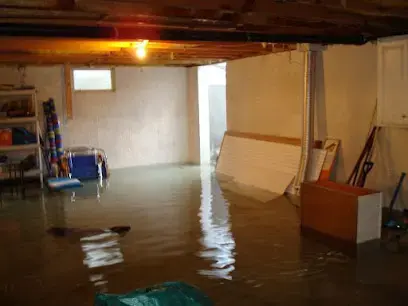
Fieldston is a low part of Marshfield where water lingers after rain. Low ground, a high water table and a slow ditch to Bass Creek mean a sump pump is working hard, and a failed pump is a real problem.
Key takeaways
- Fieldston flood water collects near Monitor Road and Mayflower Road because of low elevation, a high water table and a restricted drainage ditch to Bass Creek.
- The Town has begun drainage work on Bass Creek, but owners still plan for wet ground.
- A sump pump depends on power, so a storm outage can stop it when it is needed most.
- Wet floors and wall bases are extracted and dried, and drying has to reach the framing and the subfloor.
- Fieldston is on the Town's list of repetitive loss areas, so a flood plan is sensible.
Why water collects in Fieldston
The Town's hazard plan explains the Fieldston problem in three parts. The land is low, the water table is high and the drainage ditch to Bass Creek is restricted.
Together they leave water near Monitor Road and Mayflower Road long after the rain stops.
The soil and the water table
Marshfield is coastal lowland and river valley, and its soils are gravelly to sandy. In a low area like Fieldston, a high water table leaves heavy rain little room to soak in.
Marshfield averages 48.8 inches of rain a year.
Bass Creek and the ditch
A restricted ditch carries Fieldston water to Bass Creek. When the ditch is slow, water backs up into yards and streets.
The Town has begun drainage work on Bass Creek to improve this.
Owners should treat the work as progress, not a cure, until a few storms have tested it.
Fieldston on the Town's hazard list
Fieldston is one of 13 repetitive loss areas the Town lists, alongside places such as Brant Rock, Green Harbor and Rexhame. FEMA reported 207 repetitive loss properties in Marshfield in 2022.
All of Marshfield's repetitive loss properties are on or near the coast, tidal waterways or marsh. Fieldston's problem is partly drainage and partly the setting.
What a failed sump pump does
A sump pump sits in a pit and pushes groundwater out of the house. When it stops, the pit overflows, and the water spreads across the lowest floor.
In a high water table area, that can happen fast once the rain starts.
Why pumps fail in storms
A pump needs power. Storm winds, such as the damaging winds on February 7, 2020, when Marshfield Airport recorded a 56 mph gust, can knock power out.
A pump can also fail from a stuck float, a clogged intake, a worn motor or a tripped breaker.
- Power outage during a storm.
- A float switch that sticks up or down.
- A clogged inlet or discharge pipe.
- A pump that is old or too small for the water coming in.
- A discharge pipe that froze or was blocked outside.
Backup plans
A battery backup or a water powered backup pump keeps the water moving when the power goes. Test the main pump and the backup once a season, and clear the pit of debris.
This is general advice, so ask a plumber what suits the house.
What to do when the lower level is wet
The first steps are the same whether a pump failed or a storm brought the water. Safety and speed matter.
- Do not enter standing water until the power to the area is off.
- Turn off power at the panel only from a dry spot and only if it is safe to reach.
- Move belongings upstairs, starting with papers, electronics and anything that wicks water.
- Photograph the water level, the pump and the damage before cleanup.
- Call the insurer and ask whether the policy covers sump pump failure and groundwater.
- Call a restoration crew to extract the water and start drying.
Extraction and drying in a high water table area
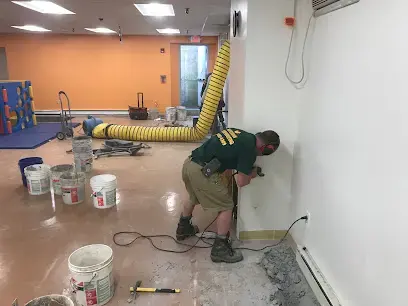
The crew pumps out the water first. Basement flooding cleanup includes pump out, slab extraction and removal of wet carpet and pad.
The harder part is drying. Where groundwater stays high, the walls and floor can keep taking up moisture until the pit is working again.
Framing and subfloor
Drywall that wicked water up from the floor is cut above the water mark. Insulation is removed, and framing is dried with air movers and dehumidifiers.
This is why structural drying reaches behind the surface and into the subfloor, not just the visible wall.
After the pump is fixed
A plumber or pump technician replaces the pump and checks the discharge. Until it works, drying equipment can be overwhelmed.
The sump pump failure cleanup page describes how the two jobs fit together.
A simple flood plan for a wet yard
Owners in a low area can do a few things well ahead of a storm. None of them needs special tools, and all of them make a flooded floor less likely or easier to clean.
Treat the list as a seasonal routine, like clearing gutters, and repeat it before the winter storms.
- Pour a bucket of water into the sump pit and watch that the pump starts, empties it and shuts off.
- Make sure the discharge pipe sends water away from the foundation and is not blocked or buried.
- Keep boxes, tools and keepsakes on shelves or pallets, not on the bare floor of a low room.
- Know where the water shutoff and the electrical panel are, and keep a flashlight near them.
- Walk the yard after rain and note where water stands longest, then photograph it for the record.
Insurance and keeping records
Coverage for groundwater and for sump pump failure varies, and many policies treat them as separate from other water losses. Ask your own insurer what applies.
Keep photographs, receipts and daily drying logs. They show what the water did and how long it took to dry.
A short checklist for Fieldston owners
Test the pump, clear the ditch and the yard drain, and keep debris out of the pit. Keep a phone list handy, and see the Marshfield hub for the other services covered in town.
Questions
Why does Fieldston flood after rain?
The Town's hazard plan points to low elevation, a high water table and a restricted drainage ditch to Bass Creek, which collects water near Monitor Road and Mayflower Road.
Is the Town working on the problem?
The Town has begun drainage work on Bass Creek. Owners should still plan for wet ground until the work has been tested by storms.
What happens when a sump pump stops?
The pit overflows and water spreads across the lowest floor. Fast extraction and drying limit the damage.
Can a storm outage stop a sump pump?
Yes, because the pump needs power. A battery backup keeps it running during an outage.
How long does it take to dry a wet lower level?
Usually several days. The crew checks readings every day and stops when framing and subfloor are dry.