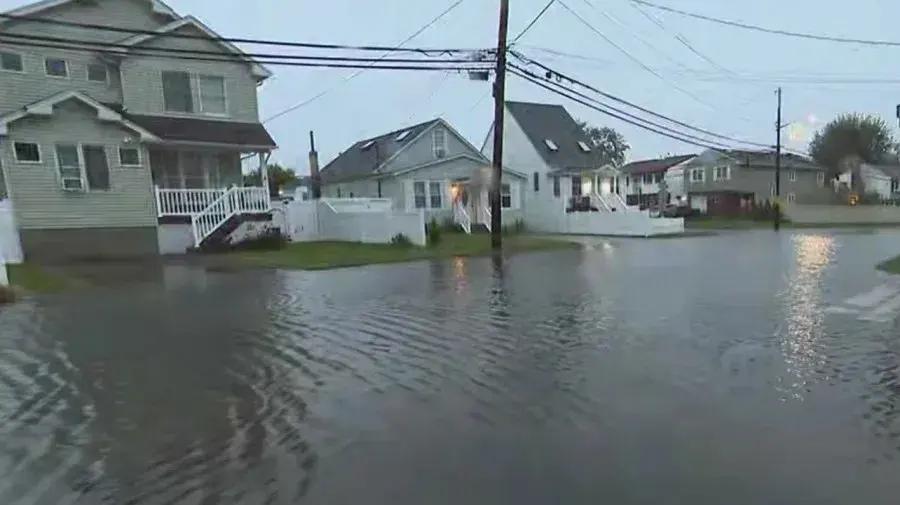
A nor'easter does not need to make landfall to flood a house. Wind pushes Plymouth Bay and Cape Cod Bay against the shore, rain falls sideways, and water finds the low door, the garage or the lowest floor.
Key takeaways
- Surge from Plymouth Bay, Plymouth Harbor or Cape Cod Bay carries sewage, silt and debris, so it is treated as Category 3 water.
- Power comes off first, and nobody should stand in standing water until the panel is confirmed safe.
- Carpet, pad, insulation and the lower drywall that soaked in surge water are removed, not dried in place.
- Photographs taken before anything moves are the backbone of the claim file.
- Drying to the IICRC S500 standard is what stops a flooded house from turning into a second problem a few weeks later.
Why a nor'easter floods Plymouth differently than a summer storm
Plymouth faces two bodies of water at once. Plymouth Bay and Plymouth Harbor sit along the front of town, and Cape Cod Bay opens beyond them.
When a nor'easter stalls over the coast, the wind holds the tide in. High water arrives with waves on top, and rain adds to it from above.
What the town has already been through
The January and March 2018 nor'easters brought coastal flooding and bluff erosion along the Plymouth shore. Hurricane Bob in 1991 is the other storm local owners remember, and hurricane remnants still arrive in late summer.
Plymouth also has Town Brook, the Eel River and a long list of ponds and cranberry bogs inland. Heavy rain can fill those too, so a house away from the harbor is not automatically safe.
Which homes are most exposed
Houses closest to the harbor and the bay shore see surge first. Seasonal cottages near the beaches, including White Horse Beach, sit low and were never built to be flooded.
Older houses in Downtown Plymouth and North Plymouth have fieldstone, brick or block foundations that let water in at the base once the ground is saturated.
The first day: a safe order of steps
The first day is about safety, then about stopping the water from spreading deeper into the house. The order matters more than speed.
A restoration crew can start work the moment the building is safe to enter.
- Stay out of standing water until the power is confirmed off at the panel and the main breaker has been checked from a dry spot.
- Wear boots and gloves. Surge water is not clean rainwater, and a scratch or a swallowed splash is a real risk.
- Move only what can be lifted out of the water safely: papers, electronics, small furniture, photographs.
- Do not run a household vacuum or a bathroom fan over wet floors.
- Take photographs and short video of every room before anything is moved, with a few shots that show the waterline on the walls.
- Call the insurer to open the claim and ask what coverage applies, because wind, rain, surge and sewer backup are often treated separately.
Why surge water is treated as Category 3
Floodwater from the bay has crossed streets, yards, storm drains and, in places, septic systems. By the time it reaches a living room it is contaminated, whatever it looks like.
The industry standard for this is called Category 3, sometimes described as black water. It changes what is allowed to stay in the house.
What that means for materials
Porous materials that soaked in Category 3 water are removed. Hard surfaces are cleaned and treated with antimicrobial.
The crew is working to a rule, not a preference, and that rule is the reason a flooded carpet cannot be saved by drying it.
- Carpet and pad come out and go to disposal.
- Insulation inside wet wall cavities is pulled and replaced.
- Drywall that wicked water up from the floor is cut off above the water mark, often in a straight flood cut.
- Upholstered furniture and mattresses that sat in the water are rarely worth keeping.
- Wood and tile floors may be saved if the subfloor can be dried and treated, which depends on readings.
Extraction, drying and what the readings show
Standing water goes first. A truck-mounted unit or a pump pulls it out quickly, because every hour water sits is more water in the framing.
After extraction the structure is still wet inside. Water extraction is only the start of the job.
Equipment and daily checks
Air movers and low-grain dehumidifiers run around the clock, and moisture meters and a thermal camera map what the eye cannot see.
The crew returns each day, takes readings and moves or removes equipment until the framing and subfloor match a dry reference. Plymouth is damp near the water most of the year, so that goal takes patience.
When the flooded space is a lower level
A garage, a finished lower floor or a crawl space is where surge ends up. If water reached it, the job overlaps with basement flooding cleanup, including pumping out, flood cuts and dehumidification.
Mechanical equipment such as a furnace or water heater in that space needs to be checked before anyone turns it back on.
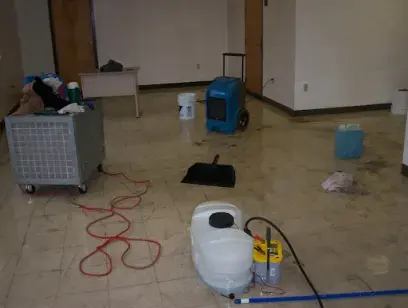
Drying structure after the water is gone
Surface dry is not dry. Wet framing, sill plates and subfloor can look fine for days while moisture stays trapped behind trim and under flooring.
That is why structural drying continues after the standing water is long gone, and why readings, not appearance, decide when equipment leaves.
- Baseboards come off so air can reach the wall cavity behind them.
- Small holes or flood cuts let a dehumidifier pull moisture from inside the wall.
- Hardwood may need drying mats, and some boards cup anyway if the water was deep.
- Daily logs record temperature, humidity and moisture readings, which later support the claim.
After the storm: the claim file and the next nor'easter
Keep the photographs, receipts for emergency work, a list of damaged contents and the reports from the crew. Insurers usually ask for them in that form.
Policies differ on surge, wind driven rain and sewer backup, so ask your own insurer which coverage applies before assuming anything.
Getting ready for the next one
Raise valuables off the lowest floor before the forecast, check that gutters and downspouts carry water away from the foundation, and know where the main shutoff and electrical panel are.
Owners of seasonal homes near the beaches and ponds can ask a neighbor to check the house after any storm.
When to call for help
Call as soon as the building is safe to enter. For nor'easter flooding in Plymouth, storm flood cleanup covers the extraction, the removal of contaminated materials and the drying in one visit sequence.
Questions
Is nor'easter flood water in a Plymouth home dangerous to touch?
Yes. Water pushed in from the bay or harbor is treated as Category 3, meaning it can carry sewage and other contamination. Wear boots and gloves, keep children and pets out, and wash after any contact.
Can wet carpet from coastal flooding be saved?
Not after Category 3 water. Carpet and pad that soaked in surge water are removed, because drying does not make them safe to live on again.
How long does it take to dry a house after a nor'easter flood?
Drying commonly takes several days, and longer for deep water or dense materials. The crew stops when daily readings match a dry reference, not on a set date.
Does homeowners insurance cover coastal flooding?
It depends on the policy and on how the water got in. Wind, rain, surge and sewer backup are often treated differently, so ask your own insurer before the work begins.
What should be photographed before cleanup starts?
Every room, the waterline on walls, damaged contents, the electrical panel and any visible source of water. Short video walk-throughs help, and so does a note of the date and time.