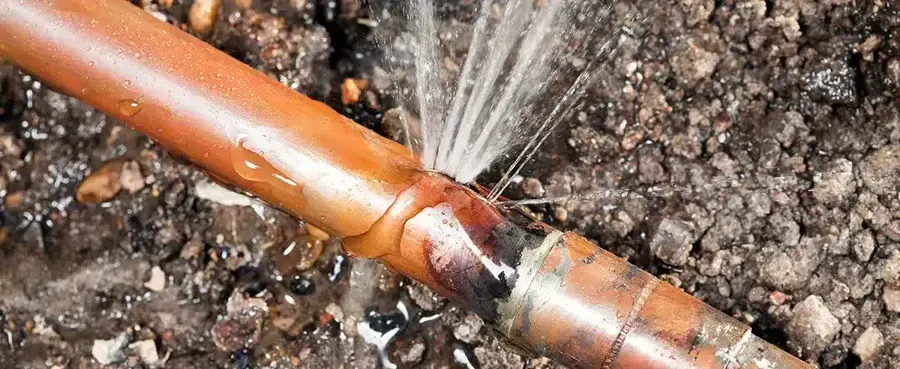
A water main break shuts off the street, not just the house. When the water comes back, pressure and air surge through the pipes, and any weak fitting or open tap can turn into a leak.
Key takeaways
- Main breaks are the town's job, but the plumbing inside the house is the owner's.
- Water coming back on can discolor and push air through the pipes, so run cold taps gently at first.
- Check for open faucets, a dry water heater and any appliance that was running when the water went off.
- A leak found early is an extraction job. A leak found days later is a drying job.
- Wareham saw two main breaks in early 2026, a reminder that aging mains fail.
What happened on Cromesett Road and in Onset
Wareham has two separate public water suppliers: the Wareham Fire District's Wareham Water Department and the Onset Fire District's Onset Water Department. Each looks after its own mains.
In early 2026, both areas had a break within a few weeks of each other.
January 29, 2026
A water main break closed Camp Street in Onset, and Onset and Wareham water crews responded. Water trickled onto Onset Avenue.
February 7, 2026
A main break on Cromesett Road near Route 6 shut off water to nearby homes until about 2 p.m., with possible discoloration afterward.
The main was old and had been repaired about 15 years earlier, and the break came just past that repair. Cold temperatures and light snow slowed the work.
What the water department said
A Wareham Water Department supervisor said water main breaks occur as mains age. That is the practical message for owners, because the next break can come at any time.
What happens inside a house when water returns
When a main is shut off, the pipes inside the house drain or empty to the lowest point. When service returns, water refills them quickly.
The first rush can carry air, sediment and rust, and the sudden pressure can find a fitting that was already weak.
- A faucet left open when the water went off will run as soon as service returns.
- A toilet fill valve or washing machine hose can fail under a sudden surge.
- A water heater that drained may fire with an empty tank if the power or gas was left on.
- Old galvanized or corroded fittings can split under pressure they have held for years.
- A dishwasher or icemaker with a loose connection may leak when the pressure builds.
A checklist for before and after the water comes back
A quick walk through the house can save a lot of drying later. Do it before the water returns when possible.
While the water is off
Close faucets, tubs and sinks so nothing runs unseen. Turn off power or gas to the water heater, and keep the washer and dishwasher unplugged.
- Close every faucet and shower valve.
- Switch the water heater off at the panel or the gas valve.
- Pull the plug on the washer and dishwasher.
- Note where the main shutoff is and make sure it works.
When the water returns
Open the main slowly. Run one cold tap at a time until the water runs clear, and check under sinks, behind toilets and around the water heater for drips.
Discolored water is possible after a break, so do not use it for laundry until it runs clear.
- Open the main valve slowly, not all at once.
- Run cold taps first, then hot, until clear.
- Look under every sink, at every toilet and around the water heater.
- Check the ceiling below a bathroom or kitchen for a new stain.
- Refill the water heater before turning it back on.
When a leak shows up after the water is back
A leak found right away is a small job. The first move is to shut off the main and stop the water.
If the floor is wet, the next move is to remove the standing water before it soaks into the subfloor and the cabinets.
Extraction first
Standing water is pulled out by pump or truck mounted unit, and soaked pad or insulation is removed. Water extraction is the first stage, and it matters most in the first day.
The longer water sits, the deeper it goes and the more has to be opened and dried.
A broken pipe inside the wall
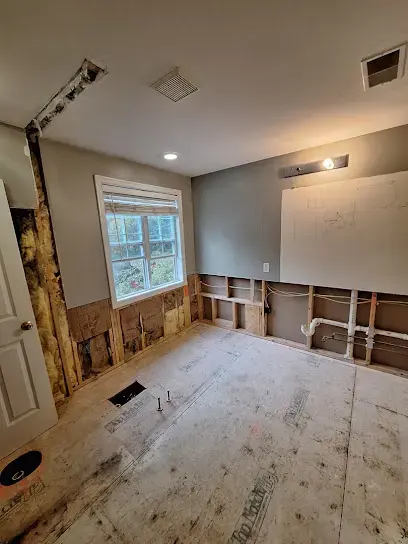
A split pipe behind a wall can run unseen. The crew finds it with a thermal camera and moisture meters, opens the wall where the readings call for it and dries the cavity.
The burst pipe water damage page explains the process in Wareham.
The pipe itself is repaired by a plumber, who may also check the pressure the house is getting.
Drying and what the readings decide
After extraction, air movers and dehumidifiers dry the walls, floor and framing. The crew checks readings every day.
The goal is a dry reference, not a dry looking surface. Wareham is a coastal town at the head of Buzzards Bay, so humid air can slow the work.
- Baseboards are removed so air can reach the wall cavity.
- Small openings let a dehumidifier pull moisture from inside the wall.
- Equipment stays until daily readings match the reference.
- Logs from the crew support an insurance claim.
Insurance and the water supplier
A leak from a failed pipe or fitting inside the house is a plumbing loss. A break in the street is the water supplier's matter, and it usually does not cover damage inside a house.
Policies differ, so ask your own insurer how a sudden pipe failure is treated. Take photographs, keep receipts and note the time the water went off and came back.
For other services in town, the Wareham hub lists every service, and the main burst pipe water damage page explains the general process.
Questions
Why does water look brown after a main break?
Sediment and rust can be stirred up in the mains. The department notes possible discoloration after a break. Run cold taps until the water is clear before doing laundry.
Can a main break cause a leak inside my house?
Indirectly, yes. The sudden return of pressure can expose a weak fitting, and a faucet left open will run as soon as service returns.
Should the water heater be turned off during an outage?
Yes, switch it off at the panel or gas valve, and refill the tank before turning it back on. A heater firing with an empty tank can be damaged.
Who pays for damage inside a house after a street main break?
Insurance questions depend on the policy and the cause. Ask your own insurer, and keep photographs and receipts.
Who supplies water in Wareham?
Two suppliers serve the town: the Wareham Water Department under the Wareham Fire District, and the Onset Water Department under the Onset Fire District.