Structural Drying and Dehumidification in Kingston, MA
The coastal setting beside Kingston Bay and the Jones River marsh makes thorough drying important after any water loss. The drying team sizes equipment to the job and keeps it running until the readings say dry.
(888) 480-6221Get the Kingston dry-out started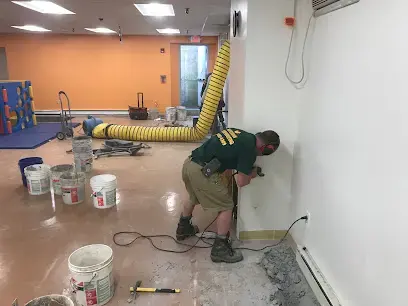
Structural Drying and Dehumidification at a glance
First steps for structural drying and dehumidification in Kingston
- 1
Leave the equipment alone
Do not move or unplug machines the crew set.
- 2
Keep doors closed
Closed rooms hold dry air where the machines can use it.
- 3
Expect some noise
Dehumidifiers and air movers run all day and night.
- 4
Be ready for readings
The crew returns daily to check progress.
How structural drying and dehumidification works in Kingston
Drying a building is a measured job, not a matter of running fans. Water sits in framing, subfloor and drywall where it cannot be seen, and only meters and logged readings show when it is truly gone. A house that feels dry can still hold water in the framing.
What does structural drying and dehumidification cost in Kingston, MA?
In Kingston, MA, structural drying typically runs $1,500 to $12,000. Equipment count, days on site and how much of the house is wet set the price, with a single contained room at the low end.
One room
$1,500 to $4,000- Air movers
- One dehumidifier
- Short stay
Several rooms
$4,000 to $8,000- Cavity drying
- More dehumidifiers
- Daily logs
Whole floor or more
$8,000 to $12,000- Desiccant units
- Long runtime
- Full documentation
Ranges are typical, not a quote: category of water, square footage, material class and how fast drying started move the number most. Run the water damage cost calculator for a closer range.
The structural drying and dehumidification process, stop by stop
The tech who does the walkthrough maps moisture before any equipment goes down, so the drying plan matches what is actually wet. Equipment stays until the readings say dry, not until the room looks dry.
- 1
Map the water
Meters and a camera mark every wet material.
- 2
Place equipment
Air movers and dehumidifiers match the class of loss.
- 3
Check daily
Readings show each material drying.
- 4
Stop at dry
Machines leave when readings match a dry reference.
Why Kingston buildings dry slowly
Humid air off Kingston Bay and the marsh along the Jones River slows evaporation, especially in summer. Without a dehumidifier pulling moisture out of the air, fans just move damp air around the room.
- Coastal humidity that holds water in materials.
- Dense framing, hardwood and plaster.
- Closed cavities with little airflow.
How the drying team works
The team starts with a moisture map and a psychrometric baseline, then sizes air movers to the wet area and LGR dehumidifiers to the class of loss. Desiccant units are added for dense materials. Walls can be treated through small holes when opening them is not needed. Readings are taken daily, and equipment is adjusted or removed as materials approach dry.
- Moisture map and baseline readings.
- Equipment matched to the class of loss.
- Equipment moved as the wet area shrinks.
- Daily logs for the adjuster.
Where drying fits
Drying follows water extraction and applies after every loss, from burst pipe water damage to a flooded basement. Equipment leaves only when the structure reads dry, not when it feels dry to the touch. Finishing too early is how hidden damage returns.
Structural drying and dehumidification across Kingston and nearby towns
The drying team works across ZIP 02364, including Rocky Nook, Silver Lake, Gray's Beach, the Jones River corridor, the Wapping Road area and the Route 3A corridor.
The same service nearby: structural drying and dehumidification in Plymouth, Duxbury, Marshfield.
Related water damage services in Kingston
Structural Drying and Dehumidification questions in Kingston, MA
How do you know a building is dry?
Meters read each material against a dry reference in the same house. When readings match, drying is finished, whatever the surface feels like.
Why are dehumidifiers needed as well as fans?
Fans move moisture into the air, and a dehumidifier removes it. Without both, the room stays humid and materials keep holding water.
How long does structural drying take?
Often three to seven days. Hardwood, plaster and masonry take longer, and humid summer air off the bay can add time.
Can drying save hardwood floors?
Sometimes. Fast drying with special mats can save boards that have not cupped yet, while badly warped planks have to be replaced.
Why is the equipment so loud?
Air movers and dehumidifiers run around the clock to keep the drying curve moving. The noise ends when the readings say dry.
Does insurance pay for drying?
Covered water losses usually include drying equipment and monitoring. Policies differ, so ask your own insurer, and keep the daily logs for the file.
Still dealing with structural drying and dehumidification?
Shut off the water at the source if it is safe, keep clear of wet outlets, then call.
Wet structure in Kingston? Dry it to the number.
Moisture left in framing and subfloor turns into bigger repairs later. The drying team sizes the equipment and logs every reading until it is dry.
(888) 480-6221Kingston drying crew, 24/7- Dispatch around the clock, storm nights included
- Drying held to the IICRC S500 standard
- Daily moisture logs for the claim file
- Find us on Google